Pool Leak Detection in Willingboro, NJ
Accurate pool leak detection Willingboro NJ pool owners rely on for dye testing and hydrostatic line isolation. Serving Buckingham Park, Pennypacker Park, and surrounding Burlington County communities.
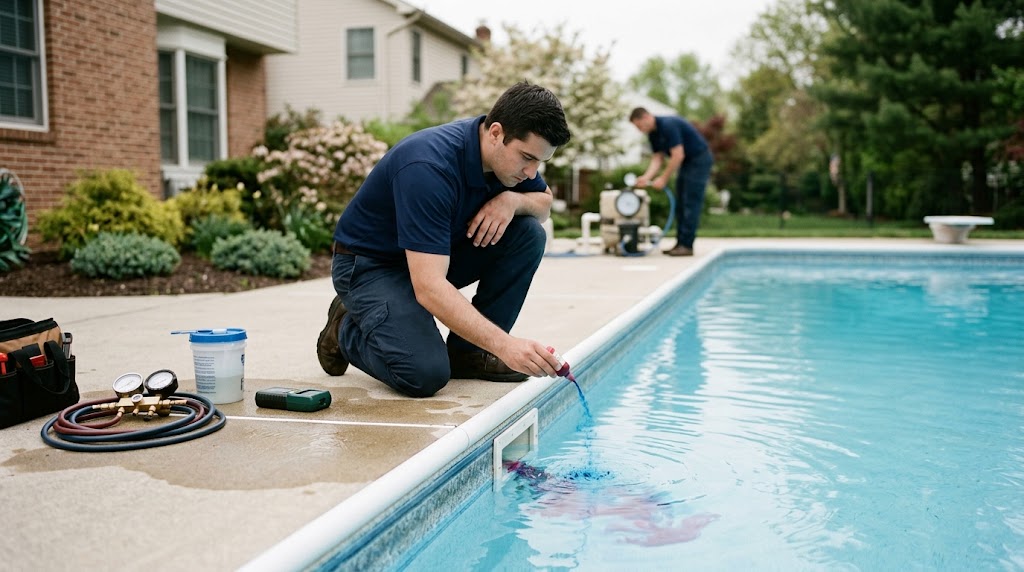
Precision dye testing and suction/return line pressure diagnostics in Willingboro, NJ.
Diagnosing Swimming Pool Water Loss in Willingboro Backyards
Many properties in Willingboro neighborhoods like Country Club Park, Buckingham Park, and Millbrook Park feature inground swimming pools that provide summer relaxation. However, maintaining pool plumbing in South Jersey comes with distinct environmental challenges. Sandy soils shift easily around concrete bond beams and buried PVC plumbing runs, while harsh winter freezes cause ground movement that strains rigid piping connections.
When water levels drop by several inches a week, property owners are often unsure whether evaporation, high swimmer splash-out, or an active structural breach is responsible. Adding thousands of gallons of water continually dilutes chemicals, damages pumps, and erodes the soil sub-base beneath concrete pool decks. If you suspect an inground pool leak Willingboro backyards frequently face, technical leak detection stops water waste before structural settlement occurs.
Whether your swimming facility requires dye testing around skimmer assemblies or pressure isolation of underground return circuits, our specialized pool plumbing leak Willingboro NJ service pinpoints the failure without needlessly tearing up pool decks.
The Bucket Test vs. Real Water Loss
Before scheduling diagnostic pressure equipment, homeowners can conduct an authoritative bucket test to differentiate normal evaporation from a true structural or plumbing breach:
- Place a 5-gallon bucket filled with pool water on the first or second step of the pool so the water in the bucket matches the pool temperature.
- With the pump turned off, mark the water level inside the bucket with waterproof tape, and place a second mark on the outside of the bucket indicating the pool's water level.
- Resume normal filter pump operation and wait 24 hours.
- Measure both marks. If the water level in the pool has dropped significantly further than the level inside the bucket, you have confirmed an active leak that requires professional pinpointing.
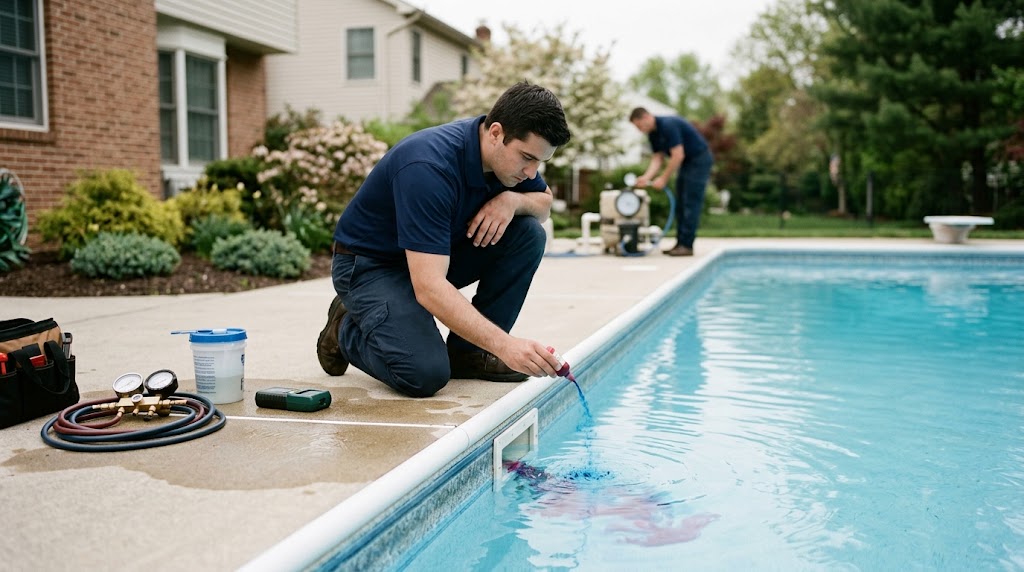
Diagnostic Testing Protocols for Inground Pools
We use non-destructive testing procedures to isolate pool shell breaches from buried hydraulic lines:
Precision Dye Testing
We introduce dense, fluorescent tracer dye around skimmer throats, main drains, return fittings, and underwater light niches. The dye gets sucked into any active structural crack.
Hydrostatic Pressure Testing
Inflatable test plugs seal each individual suction, return, and cleaner line. Digital pressure gauges monitor each line to isolate subterranean pipe fractures.
Acoustic Underground Tracing
If an underground PVC line loses pressure under pool decking, acoustic ground microphones locate the sound of water or air escaping through concrete pavers.
Electronic Liner Scanning
For vinyl-liner pools, specialized electronic leak sensors detect microscopic pinhole tears across floor and wall seams without draining the pool water.
Common Leak Points: Winterizing & Spring Opening
In South Jersey, the majority of pool plumbing failures originate during seasonal transitions:
Skimmer and Light Niche Cracks
Ground settling between the rigid pool wall and the surrounding concrete patio creates shear stress on skimmer throats. Furthermore, underwater light niches often experience conduit leaks where wires exit through the pool wall.
Winter Freeze Damage
When autumn winterization fails to completely blow out water from underground return manifolds, winter freezing cracks PVC fittings beneath the frost line. Homeowners discover rapid water loss upon spring pool opening.
Once the leak location is verified, pool service contractors can carry out targeted swimming pool leak repair Willingboro solutions without tearing out entire concrete aprons.
Losing Water in Your Willingboro Swimming Pool?
Don't let leaking pool water wash out your patio foundation or waste chemicals. Speak directly with our diagnostic specialists today.
Connecting Pool Diagnostics to Surrounding Systems
Underground pool supply lines frequently run alongside lawn sprinkler systems and main water lines. If your water loss extends to your lawn or main meter, explore our irrigation leak detection and water line leak detection services, review our Willingboro service areas, or return to our comprehensive overview of leak detection in Willingboro.
New Jersey Plumbing & Excavation Compliance
In New Jersey, plumbing repairs require a licensed master plumber. Before performing any exterior excavation, call NJ One Call at 811. Water utilities across New Jersey are also actively executing mandatory lead service line replacement programs.
Frequently Asked Questions About Pool Leak Detection
How do I perform the bucket test to confirm my Willingboro pool is leaking?
Fill a 5-gallon bucket with pool water and place it on your pool step. Mark the water level inside the bucket and outside on the pool wall. After 24 hours of normal operation, compare the two marks. If the pool water level drops significantly more than the bucket level, your pool has an active leak rather than natural South Jersey summer evaporation.
Why do inground pools often leak after New Jersey winter freezes?
Burlington County winters bring prolonged freeze-thaw cycles. If underground return lines, skimmer throats, or main drain pipes retain residual water during autumn winterization, expanding ice can crack PVC fittings, crack skimmer bodies, or tear vinyl liners.
Are underwater light niches and skimmer throats common leak points?
Yes. The junction between the concrete deck, skimmer throat, and pool shell is subject to ground movement. Light conduit tubes running back to junction boxes also frequently develop cracked seals, allowing hundreds of gallons to escape unseen into surrounding soils.
Schedule Inground Pool Leak Pinpointing in Willingboro
Stop losing thousands of gallons of treated pool water every week. Call our Willingboro team now for non-destructive pool dye and pressure diagnostics.